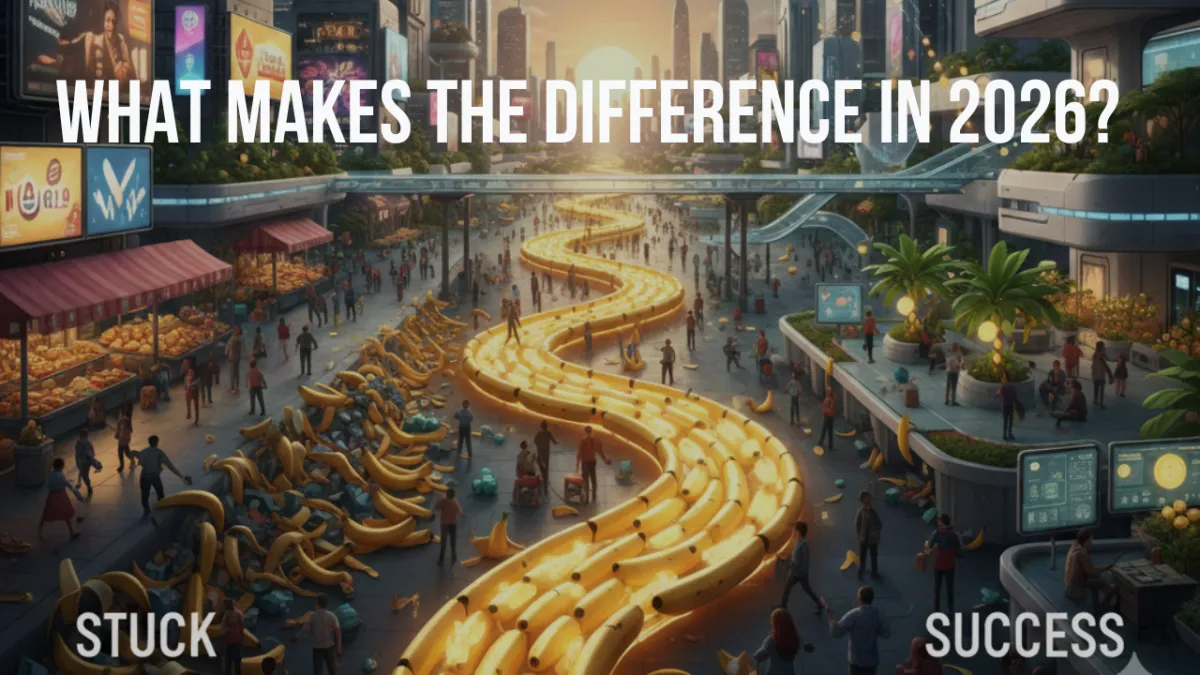
The Real Difference: Why Some Achieve Financial Success While Others Stay Stuck (2026 Edition)
As we navigate the economic landscape of 2026, the divide between the "haves" and the "have-nots" has never felt more pronounced. We see it in our neighborhoods, our social feeds, and our bank accounts. But if you look closely, the difference isn't always found in a person's starting salary, their education level, or even their luck.
The real difference—the one that actually moves the needle over a decade—is found in the psychology of money management and the ability to distinguish between "income" and "wealth."
In this deep dive, we explore the specific shifts in mindset, habit, and strategy that define financial success in the modern era.
The Production vs. Consumption Mindset
The most fundamental difference is how one views a dollar bill.
For the average person, money is a voucher for consumption. When they receive a paycheck, their first thought is, "What can I buy with this?" They see a new car, a vacation, or a luxury item. This is a linear way of living: you work, you earn, you spend, and you are back at zero.
For those who achieve financial success, money is a seed for production. They view every dollar as a "worker" that can be sent out to bring back more dollars. In 2026, with the rise of accessible mutual funds and fractional asset ownership, the "production mindset" is more available than ever, yet remains rare.
The Power of the "Rule of 72" and Compound Growth
Financial literacy isn't about knowing how to pick the "hot stock" of the week. It’s about understanding the "Laws of Physics" for money.
The financially successful don't just "save"; they capture the cost of time. They understand the Rule of 72—a simple formula to determine how long it will take for your money to double ($72 \div \text{interest rate} = \text{years to double}$).
While the rest of the world is focused on the "now," successful individuals are focused on the "n." (the number of periods their money can compound). They understand that being "comfortable" today is the greatest enemy of being "wealthy" tomorrow.
Proactive Problem Solving and the "Value Exchange"
Wealth is often a side effect of solving problems for other people.
Most people are "order takers." They trade their time for a fixed hourly rate or salary, which creates a "ceiling" on their potential. Financially successful individuals—particularly those in entrepreneurship or financial services—understand the Law of Compensation. Your income is determined by:
The need for what you do.
Your ability to do it.
The difficulty there is in replacing you.
In 2026, the most "irreplaceable" skill is the ability to help others navigate financial complexity. This is why many are turning to roles as financial agents, where they can scale their income by helping families solve the "debt and protection" puzzle.
Emotional Intelligence and the NEPQ Approach to Success
One of the newest differentiators in 2026 is Neuro-Emotional Persuasion. Financial success often requires "selling" yourself on your own goals—and helping others do the same.
The "rest of us" often feel like victims of the economy. We feel "sold" by the media and the banks. However, successful people take a problem-centric approach. They don't push; they pull. They ask themselves (and their clients) the hard questions:
"What happens if you stay on the path you're on for another five years?"
"How would it affect your family if your income stopped tomorrow?"
By focusing on the "Why" rather than the "How," they build a level of conviction that leads to massive execution.
The 2026 Financial Success Roadmap: Habits of the 1%
To bridge the gap, one must adopt the "Triad of Success":
A. The Financial Needs Analysis (FNA)
You cannot hit a target you cannot see. Successful people have a written plan. They know their "Financial Independence Number." They use tools like a Financial Needs Analysis to look at their life insurance, their retirement, and their debt management in one holistic view.
B. Defensive vs. Offensive Financial Plays
Defense: Proper protection (Term Life Insurance) and an emergency fund.
Offense: Consistent, automated contributions to Mutual Funds and retirement accounts.
C. The Recruitment of Mentors
Successful people don't go it alone. They join environments where success is the norm. Whether it’s joining a financial agency or finding a coach, they realize that "proximity is power."
Conclusion: Will You Bridge the Gap?
The difference between financial success and "getting by" isn't a secret code. It’s the disciplined application of simple principles over a long period. In 2026, the opportunities to build wealth are everywhere—but the distractions are also at an all-time high.
Are you ready to stop being a consumer of your future and start being a producer of your wealth? Contact Legacy Protection Services for a FREE analysis and plan to help you meet your goals.
